Altstadt €€€ Higher prices
Best for: First-timers
Marienplatz, the Viktualienmarkt and the Hofbräuhaus on foot. Central and pricey.
Beer halls, palaces and the Alps on the horizon.

Munich is Bavaria in one city: an easy, walkable old town, big beer halls and some of Germany's best day trips, from Neuschwanstein to Salzburg.
Three days covers the centre plus one big day out. During Oktoberfest (late September), prices double and rooms vanish.
You can wander Munich for free. These five you'll end up paying for, so book them before you fly.
Ludwig II's fairy-tale castle in the Bavarian Alps.
Our tip: Castle tickets are timed and limited. Check that your tour includes or reserves them.

Beer halls, the Viktualienmarkt and Bavarian classics with a local.
Our tip: Go hungry. Weekday tours are calmer than Saturdays.

Germany's largest city palace, with the Treasury and the Antiquarium.
Our tip: The combined ticket adds the Treasury; allow two hours.
A century of cars and motorbikes next to the Olympic Park.
Our tip: BMW Welt is free; the museum needs a ticket.
Mozart's city, about 1 h 30 min away, across the Austrian border.
Our tip: Easy by train on your own; tours add the Sound of Music sites.

In Munich, where you sleep decides how much of the city you see on foot. These are the areas we recommend, and who each one suits.
€€€ €€ € Price levels compare the areas within this city.
Best for: First-timers
Marienplatz, the Viktualienmarkt and the Hofbräuhaus on foot. Central and pricey.
Best for: Museum lovers and students at heart
The art museums, the university and good cafés, close to the old town.
Best for: Couples and value
Charming streets across the Isar, with local restaurants and better prices.
Three picks per question, chosen with our selection criteria, with price ranges and what nobody tells you.
About 40 min to Marienplatz
Frequent and direct to the centre.
About 45 min to the main station
Comfortable with luggage.

About 40 min
Taxis are expensive here; a booked transfer costs less.
The 10 questions everyone asks before going, answered straight.
Yes, Munich is one of Germany's safest cities. During Oktoberfest, watch for pickpockets and heavy drinking in the crowds. As in all German cities, don't walk on the bike lanes.
May to September is ideal for the beer gardens. Oktoberfest runs from late September to early October: book months ahead, as prices soar. December brings some of Germany's best Christmas markets.
German, with a strong Bavarian accent. English is widely spoken. Locals greet with "Servus" or "Grüß Gott".
Three days is ideal for the city and its beer culture. With more time, add Neuschwanstein Castle, Salzburg, the Dachau Memorial or the Zugspitze.
Marienplatz and the Glockenspiel show, the Frauenkirche, the Viktualienmarkt and the English Garden with its river surfers are all free. So are the Hofgarten and Odeonsplatz, the richly decorated Asamkirche, the Nymphenburg gardens (the palace is paid), the Olympiapark grounds and BMW Welt (the museum is paid). The Hofbräuhaus is free to enter; you only pay for the beer.
The Alte Pinakothek (Old Masters) and the Pinakothek der Moderne are the art highlights, with symbolic entry prices on Sundays. Add the Deutsches Museum of science and technology, the BMW Museum, the Residenz and its Treasury, and the Lenbachhaus (Blue Rider).
Bavarians are friendly and proud of their traditions: you'll see people in lederhosen and dirndls at festivals. In beer gardens it's normal to share tables, except those marked "Stammtisch", reserved for regulars. Shops close on Sundays. When paying, round up 5–10%.
Try Weisswurst (white sausage) with sweet mustard and a pretzel, traditionally before noon, Schweinshaxe (roast pork knuckle), Obatzda (cheese spread), Leberkäse and roast chicken. For dessert, Kaiserschmarrn or Apfelstrudel. Beer comes by the Mass (one litre); a Radler is beer with lemonade.
The Altstadt (old town) is the most central, at higher prices. Maxvorstadt, the museum and university district, is mid-range. Haidhausen is local and cheaper, near the Isar river.
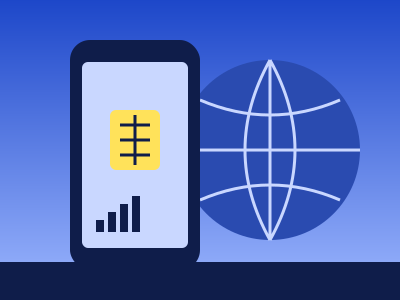
An eSIM is a digital SIM you install on your phone before you fly. No plastic card, no shop at the airport: you land, switch it on and you're online.
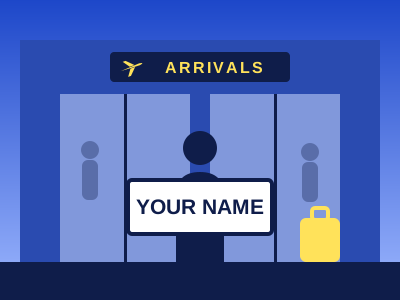
Book your airport-to-hotel and hotel-to-airport transfers in advance and forget about the taxi queue, the bargaining and the 'where do we go now?'. When you walk out of arrivals, someone is already waiting with a sign with your name on it, helps you with the bags and takes you straight to the door.