Baixa & Chiado €€ Mid-range prices
Best for: First-timers
Flat, central and elegant. Easiest base for getting around.
Hills, trams, pastéis de nata and a palace in the clouds.
Lisbon is relaxed and affordable by Western European standards, but its hills are real and the best day trip, Sintra, runs on timed palace tickets.
Three days covers the city, Belém and Sintra.
You can wander Lisbon for free. These five you'll end up paying for, so book them before you fly.
Manueline masterpiece and the Belém riverside.
Our tip: Book ahead to skip a long line. Closed on Mondays.

Fairy-tale palaces in the hills outside Lisbon.
Our tip: Pena Palace runs on timed tickets; a guided day trip handles transport.

Portugal's soulful music in an intimate Alfama house.
Our tip: Choose a show with a set dinner and book a table.
A sailing boat on the river, past Belém Tower and under the 25 de Abril Bridge.
Our tip: Two-hour sunset trips are the best value. Bring a layer; it gets windy.

One of Europe's largest aquariums, in Parque das Nações.
Our tip: A great rainy-day plan, and a sure win with kids.

In Lisbon, where you sleep decides how much of the city you see on foot. These are the areas we recommend, and who each one suits.
€€€ €€ € Price levels compare the areas within this city.
Best for: First-timers
Flat, central and elegant. Easiest base for getting around.
Best for: Couples
The old Moorish quarter: steep lanes, views and fado.
Best for: Design lovers
Upscale, leafy and full of concept stores.
Three picks per question, chosen with our selection criteria, with price ranges and what nobody tells you.
About 20 min to the centre with one change
Cheap and easy with light luggage.
About 20 min
Inexpensive for 2–4 people.
About 20 min
Good for families and hilltop hotels.
The 10 questions everyone asks before going, answered straight.
Yes, Lisbon is one of Europe's safest capitals. Watch for pickpockets on tram 28 and in the crowds of Baixa and Alfama. Ignore street sellers offering drugs in Baixa and Bairro Alto. The cobbled streets are steep and slippery, so wear good shoes.
April to June and September to October are the best months, warm and sunny without the summer heat. June brings the Santos Populares street festivals, with grilled sardines everywhere. Summer is hot and busy, and winter is mild and rainy, with lower prices.
Portuguese. English is widely spoken, and many people understand Spanish, but greet in Portuguese ("bom dia", "obrigado" or "obrigada"): locals appreciate it when visitors don't assume they speak Spanish.
Three days is ideal for Lisbon itself. With 4 or 5 days you can add Sintra (a full day), Cascais or Évora.
Praça do Comércio and Rua Augusta, the lanes of Alfama, Chiado, Bairro Alto and the miradouros such as Santa Luzia and Senhora do Monte are all free. So are LX Factory, the riverside promenade and the Time Out Market (you only pay for what you eat). In Belém, the Jerónimos church is free to visit (the cloister is paid), and you can admire Belém Tower and the Padrão dos Descobrimentos from outside.
The Calouste Gulbenkian Museum is a gem, and the National Tile Museum is unique to Portugal. Add the National Museum of Ancient Art, the MAAT on the riverfront, the Fado Museum in Alfama and the National Coach Museum in Belém.
Lisboetas are warm, relaxed and polite, a bit reserved at first and quieter than their Spanish neighbours. Lunch is around 12:30–2:30 pm and dinner from 8 pm. The bread, olives and starters placed on the table (couvert) are charged if you eat them. Tipping is optional.
The pastel de nata is a must, ideally warm in Belém. Try bacalhau (salt cod) in its many versions, grilled sardines in summer, the bifana pork sandwich, octopus à lagareiro and caldo verde soup. To drink, a ginjinha (cherry liqueur), vinho verde or port.
Baixa and Chiado are central and the flattest part of town, at mid-range prices. Alfama is full of character and cheaper, but steep. Príncipe Real is elegant and full of boutique hotels, with higher prices.
An eSIM is a digital SIM you install on your phone before you fly. No plastic card, no shop at the airport: you land, switch it on and you're online.
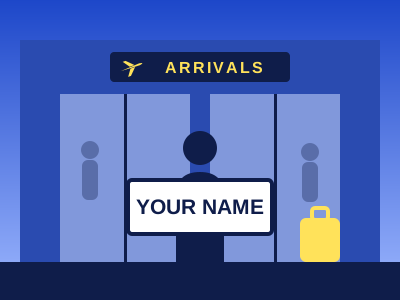
Book your airport-to-hotel and hotel-to-airport transfers in advance and forget about the taxi queue, the bargaining and the 'where do we go now?'. When you walk out of arrivals, someone is already waiting with a sign with your name on it, helps you with the bags and takes you straight to the door.